In recent months, we did research into how the accessibility of public transport in the province of North Brabant can be improved. This is in addition to the findings from the interviews and focus groups for the SINFONICA project. We will be implementing some of the interesting results into our accessibility policy regarding public transport. This will make public transport more accessible, both now and in the future, and enable more people to travel independently.
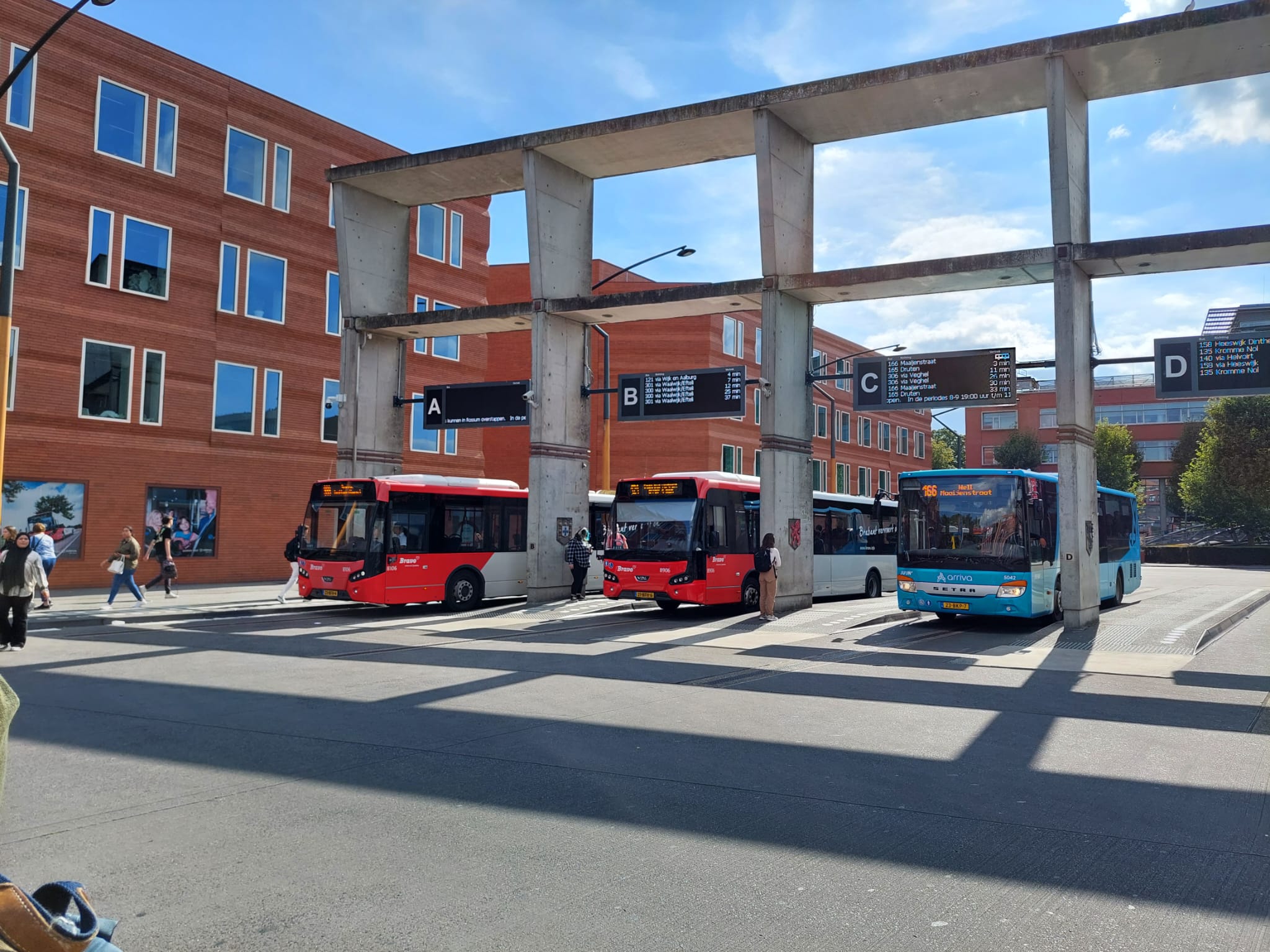
One of the findings of the SINFONICA study was that people from vulnerable groups continue to need assistance at bus stations, for example, to find the right bus or buy a ticket. Currently, they can often ask the bus driver, but when self-driving buses are introduced, there will no longer be a driver. Even with the presence of drivers, it has become clear that travel information services, particularly at large bus stations, are inadequate. They are often confusing due to the large crowds and the different bus lines. Some improvements we plan to implement are:
- Bus lines will be assigned a fixed platform at the bus stations. This way, everyone knows which platform the bus will arrive at. This is especially helpful for the visually impaired, as they won’t have to pass every platform.
- Information kiosks with audio description capabilities. This is another improvement, especially for the visually impaired, as they can find out information like current bus departure times. In addition, these kiosks will also include a “contact” button so passengers can contact the customer service of the public transport operator.
Another improvement we plan to implement, partly based on the interviews conducted for the SINFONICA study, is exploring whether we can use an app to allow passengers to indicate their desired bus stop. Currently, passengers have to press the stop button on the bus. This can sometimes cause stress for the visually impaired if they can’t find the stop button. Passengers who are unfamiliar with the bus route may also sometimes not know exactly when to press the stop button. We will investigate the possibility of developing an app that allows people to indicate their desired stop. This app will then connect to the bus driver’s onboard computer. Even when the bus has no longer a driver, this app can be useful, so the bus knows where to stop.
Finally, we will continue to remind bus drivers to assist people in wheelchairs using the retractable ramp and to ensure that the stop announcement system is always active so passengers know where the bus is. How driverless, self-driving buses can operate the ramp is still a challenge. We hope that the industry will develop to enable this, so that people who rely on a wheelchair can continue to use public transport.
The results of the SINFONICA study and our own accessibility research have provided us with new insights into how to improve the accessibility of public transport, both driverless and driverless. Ultimately, everyone should be able to travel independently as much as possible, including by public transport.